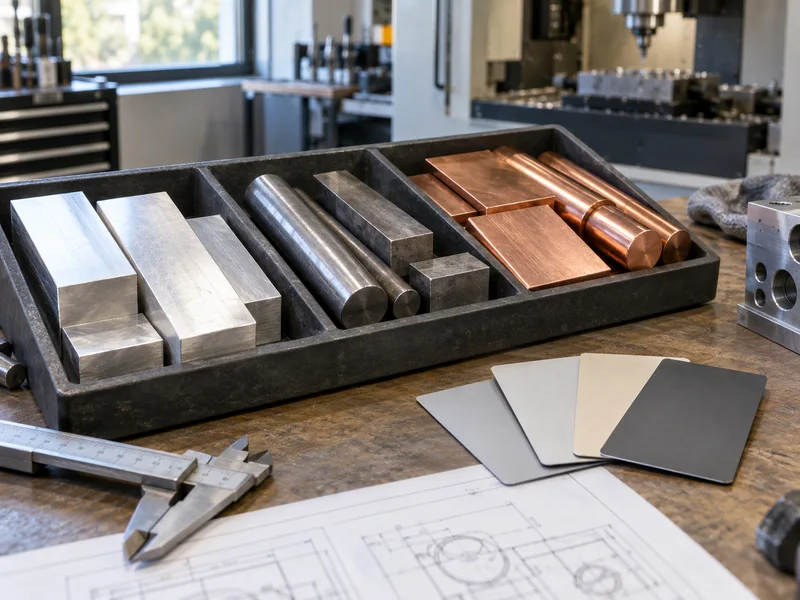
Material selection starts with the conditions around the component. Consider its load, temperature, exposure and contact with other parts. Record the requirements that are fixed by the application before discussing alternatives.
If your drawing already specifies a material, provide the exact designation. If selection is open, describe the function rather than choosing a grade only by appearance.
Include the condition, not only the grade
The required condition belongs beside the material designation. Include temper, heat treatment, hardness or polymer filler information where it is part of the specification.
Where a customer or project specification governs the material, include that reference and the applicable revision with the enquiry.
Exact material designation
Required condition or additional specification
Any application-specific acceptance criteria
Connect material, finish and records
Finishing and documentation requirements should travel with the material specification. Define protected areas, appearance requirements and any material records needed for acceptance.
Requesting traceability also requires defining what needs to be identified and documented. State the required document type and scope before quotation.
Final surface requirements
Material documentation type
Part or batch identification requirements
PUT IT INTO PRACTICE
Keep the requirement with the drawing.
Include the current revision, material, quantity and any inspection or finishing requirements when you send your project.